The Rise of Condensed Literature: A Summary Is Not a Story
Dreamsquare Team
Share this article
Every time someone defends a shorter version of a classic, the same argument appears: “That’s not really reading the book. Just read SparkNotes.” And every time someone defends SparkNotes, someone else points out it’s just a plot synopsis, not the book. Somewhere in that exchange, “condensed edition,” “abridged,” “summary,” and “retelling” get thrown around as if they’re all the same thing.
They’re not. And the confusion is why this debate never goes anywhere.
Four Things Everyone Calls “Condensed Literature” (That Are Actually Different)
Let’s draw the lines clearly, because this matters more than people realize.
A summary tells you what happened. SparkNotes. The Wikipedia plot section. A friend explaining the novel at a party. Nothing wrong with a summary — but you are outside the book, receiving a description. Not the experience.
An abridged edition uses the author’s original text with passages deleted. The words that remain are unchanged — still Fitzgerald’s, still Orwell’s, still Dickens’. Scenes are cut, descriptions shortened, secondary plots trimmed. Reader’s Digest built a 47-year franchise on this model.
A retelling is an entirely new creative work. New characters, new voice, new scenes. Inspired by the original. Not it.
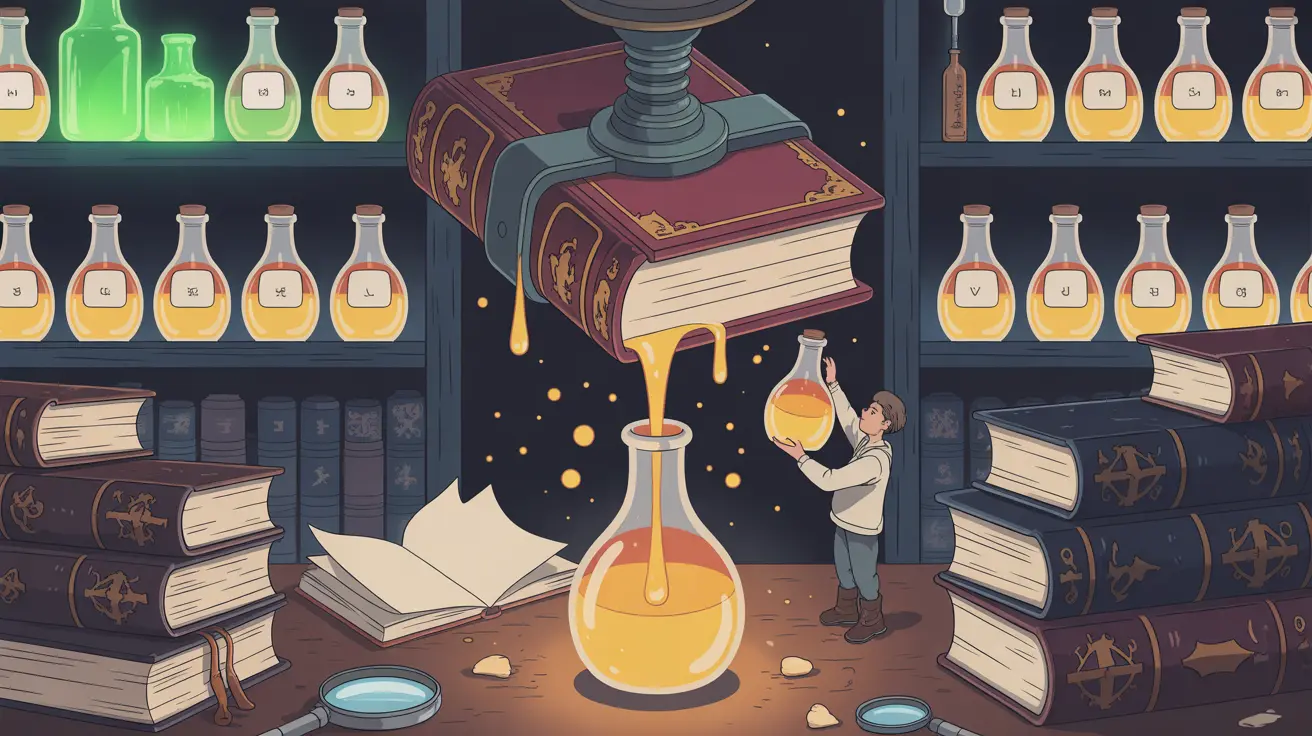
A condensed edition — what Dreamsquare calls a micro edition — is something else. The story is compressed with editorial intelligence. Same arc. Same turning points. Same emotional beats. The scene where everything changes still changes. The ending still lands. What’s gone is extended exposition, repeated setup, the density a 19th-century serialist included because their reader had no other entertainment. Nothing lost from the story. Just tighter delivery.
A summary tells you what happened. A condensed edition makes it happen to you. That’s not the same thing.
The History of Condensed Books Is Longer Than This Conversation
The argument about condensed literature feels urgent and new. It isn’t.
Reader’s Digest launched their Condensed Books series in Spring 1950. They ran it for 47 years — 213 volumes, distributed in 10 languages, selling 10 million copies internationally by the late 1980s. A massive mainstream franchise, with no real competitors, that brought multiple bestsellers to readers who wouldn’t otherwise have encountered them.
The criticism was often fair. Character development went missing. Context disappeared. What remained was closer to a fleshed-out outline than a full reading experience. Agatha Christie famously refused permission for her work to appear in the series. The format was blunt — deletion to fit an anthology, four books per hardcover, quarterly schedule — not editorial precision applied to a single title over months of careful work.
But those criticisms were about the execution. Not the concept.
An editorial team spending months on one book, asking a single question — does the story survive? — makes entirely different choices than a production franchise trimming to fit a format. The modern condensed literature movement is not the Reader’s Digest model. Same broad category. Different game entirely.
The Attention Span Myth
The popular story about why condensed books exist: modern readers can’t focus. TikTok rewired Gen Z’s brains. Nobody sits still for Middlemarch anymore. Publishers accommodate broken attention spans.
Wrong on the facts.
Gen Z reads. Book Riot surveys show 55% of Gen Z read at least once a week, and 40% read every single day. Nielsen BookData tracked that 80% of UK book sales in a measured period came from readers aged 13–24. The BookTok community has accumulated over 80 billion views — directly driving fiction sales across multiple markets. And 35% of Gen Z respondents said they’re reading more than they did two years ago. Not less. More.
The problem isn’t that people can’t sustain long-form reading. The problem is that the entry cost for certain classic books has risen sharply — and the competition for that first hour of attention has never been fiercer.
Short-form content raises the bar for starting something, not the ceiling for continuing it. A condensed edition of a difficult classic costs less to enter and returns value faster. If the story survives the condensation — if the arc is intact, the key scenes land, the ending hits — readers come back for more. Many go on to read the full version. That’s the pattern, not the exception.
Condensed literature is a door. Not a surrender.
What Quality Condensation Actually Preserves
There’s a version of the “condensed is cheating” argument that deserves a real answer. Some books are inseparable from their length. Moby Dick’s whale-biology chapters are either the whole point or the padding, depending entirely on what you’re reading for. This is a genuine editorial judgment call — not every book condenses well, and not every condensation of a given book is worth your time.
What a well-executed condensed edition of a classic novel keeps:
The emotional arc. Every novel has a spine — the sequence of events and reversals that give it shape. A quality condensed edition follows the spine. No detour.
The key scenes. The moment of choice. The confrontation. The ending. These carry the thematic weight of the book. Cut them and the story disappears. A good condensation is built around these scenes, not away from them.
The voice. Not every sentence, but the register, the tone, the intent. Condensed Dickens should feel like Dickens compressed — not an editorial committee paraphrasing Dickens from a safe distance.
What goes: pages of atmospheric description that could be a paragraph. Secondary subplots that never intersect the main arc. Exposition that restates what the reader already has. In a 19th-century serial novel, that material had a specific function — readers waited weeks between installments, and density justified the subscription model. Today’s reader is different. Their time is different. The competition is different.
Where Condensed Literature Goes from Here
The public domain shift is quietly opening up the exact books most likely to benefit. The Great Gatsby entered the public domain in 2021. More classics will follow. The most-assigned, most-referenced, most-abandoned titles in the literary canon are becoming available for quality condensation — no licensing barriers, no permissions required.
Combine that with modernized prose — updating the language rhythms of early 20th-century fiction for contemporary readers — and something genuinely new emerges. A classic that’s both linguistically accessible and structurally compressed. Same story. Language you actually speak. Length that fits the time you have.
Add Theatre Mode audio: immersive multi-voice performance with sound design. The condensed story as an experience rather than a text. The key scenes performed. The period atmosphere rendered rather than described.
Dreamsquare’s micro editions run at approximately 25% of the original length. Nothing removed from the story. Just the signal. The Theatre Mode audiobooks add the third dimension, and the full modernized texts are there for readers who want to go deeper after the micro edition opens the door.
Blinkist built 26 million users on 15-minute nonfiction summaries. Nobody has done the equivalent for classic fiction at genuine quality — not at this scale, not with this editorial intent. The demand is real and growing.
The only question that has ever mattered: is the execution worthy of the source material?
FAQ
What is the difference between an abridged book and a condensed edition? Abridged books use the author’s original text with passages removed — the words that remain are unchanged. Condensed or micro editions of classic novels compress the story through editorial judgment, preserving the emotional arc, key scenes, and voice while removing exposition and padding. A summary describes what happens rather than delivering the experience — and is different from both.
Is reading a condensed edition the same as reading the full book? Depends what you mean. If you mean experiencing the story — the arc, the key scenes, the ending — a well-executed condensed edition delivers that completely. If you mean spending time with every sentence the author wrote, that’s a different experience. Both are legitimate. For many readers, they’re sequential rather than competing choices.
Are condensed books a new idea? No. Reader’s Digest ran a condensed books series for 47 years from 1950 to 1997, selling millions of copies in multiple languages internationally. What’s changed is the editorial approach, the quality of execution, the availability of public domain classics, and the combination with modernized language and immersive audio. The concept is 75 years old. The execution is genuinely new.
Stay in the loop
Get notified when we publish new stories about books, storytelling, and the magic of reading.
Stay in the loop
Get notified when we publish new stories about books, storytelling, and the magic of reading.