How to Read a Classic Novel in One Evening (Without Cheating)
Dreamsquare Team
Share this article
You want to read Crime and Punishment. The actual book — not a blog post about it, not a ten-bullet summary that flattens Raskolnikov into “guilty guy with an axe.” You want the story, the tension, the slow moral unraveling. And you want to know how to read a classic in one evening without faking it.
The reading world hands you two options. Option one: grind through 500-plus pages of 19th-century Russian prose, absorbing maybe 60% of it, and call that good enough. Option two: skim a SparkNotes summary and pretend you got the gist.
Both are terrible. There’s a third path, and it doesn’t force you to choose between speed and the real experience. You can read classic books faster without losing what makes them worth reading — if you pair the right techniques with the right format.
The Math Nobody Mentions
Before technique, arithmetic. The average adult reads around 250 words per minute. A solid evening — three to four hours of focused time — covers somewhere between 45,000 and 60,000 words. That’s 150 to 200 pages of a standard novel.
Some classics already fit that window. The Old Man and the Sea runs 96 pages. Kafka’s The Metamorphosis? Forty-four. Animal Farm sits at about 95. Dr. Jekyll and Mr. Hyde clocks in at 64 pages. These aren’t minor works. They’re pillars of the literary canon that happen to be short. If you’re looking for books you can read in one evening, this is your starting lineup.
But if you’re eyeing Moby Dick or The Brothers Karamazov — that’s not a discipline problem. It’s math. No trick compresses 600 pages of dense prose into one evening without gutting the story.
Step one is honest. Pick a book that fits the window. Or find a format that does.
Five Techniques That Actually Help
Speed reading gets brought up constantly in this conversation, and I’m skeptical of it for classics. Speed reading dampens subvocalization — that inner voice sounding out each word as you go. For a business book, fine. For Dostoevsky, where every sentence is built to resonate internally? Killing that voice kills the experience.
Here’s what works instead.
Read the context first. Spend five minutes on the historical period, the author’s aim, the main characters. This isn’t spoiling. Professors call it a reading frame. Knowing Gregor Samsa wakes up as an insect on page one doesn’t ruin The Metamorphosis. It frees you to notice what Kafka actually cares about: the family’s slow, horrified withdrawal.
Go slow at the edges, fast through the middle. Most classics front-load their setup and back-load resolution. The middle carries description, digression, atmospheric passages. Pick up speed there. The plot won’t punish you for it.
Use a pointer. Finger, pen, bookmark edge — anything that pulls your eye forward line by line. Sounds almost childishly simple. But it eliminates regression: the unconscious habit of re-reading sentences your brain already processed. Research suggests regression eats up to 30% of reading time. A pointer kills it nearly on contact.
Read in 45-minute blocks. Forty-five on, five off. Three rounds and you’ve banked over two hours of focused reading — enough for most books you can read in one evening. Sprint format beats marathon sessions because attention stays sharper in intervals. Two hours of drifting isn’t two hours of reading. Not even close.
Pick a modern-language edition when one exists. The technique everyone overlooks. Much of what makes classics difficult has nothing to do with the story — it’s the language. Victorian constructions running half a page long. Archaic vocabulary no one has used since the 1880s. A contemporary English version, faithful to the original but stripped of linguistic friction, cuts reading time significantly while keeping the story whole. This single shift lets you read classic books faster than any speed-reading course will.
The Honest Problem With Long Classics
Here’s where I level with you. If the classic you want tonight is War and Peace, no combination of techniques makes that work. Not with real comprehension. Not if you want the experience rather than a checkmark on some list.
The real barrier often isn’t page count — it’s cognitive load per sentence. Your speed on Hemingway might hit 300 words per minute. On Dickens, it drops to 180. On Tolstoy in translation, lower still. That’s not a personal failing. It’s what engaging with a different century’s prose costs you in processing time.
Okay, that’s a bit oversimplified. Some readers tear through Victorian English like it’s a beach read. But most don’t. And that’s why technique alone can’t always solve how to read a classic in one evening when the book runs past 300 pages.
The conversation needs to shift here. From technique to format. Technique has a ceiling. Format doesn’t.
Micro Editions: Condensed Literature, Full Story
There’s a format most people haven’t encountered yet — the micro edition. Not a summary. Not SparkNotes. And not one of those old abridged versions that hacked out chapters at random, leaving you with a skeleton dressed in the title’s clothes.
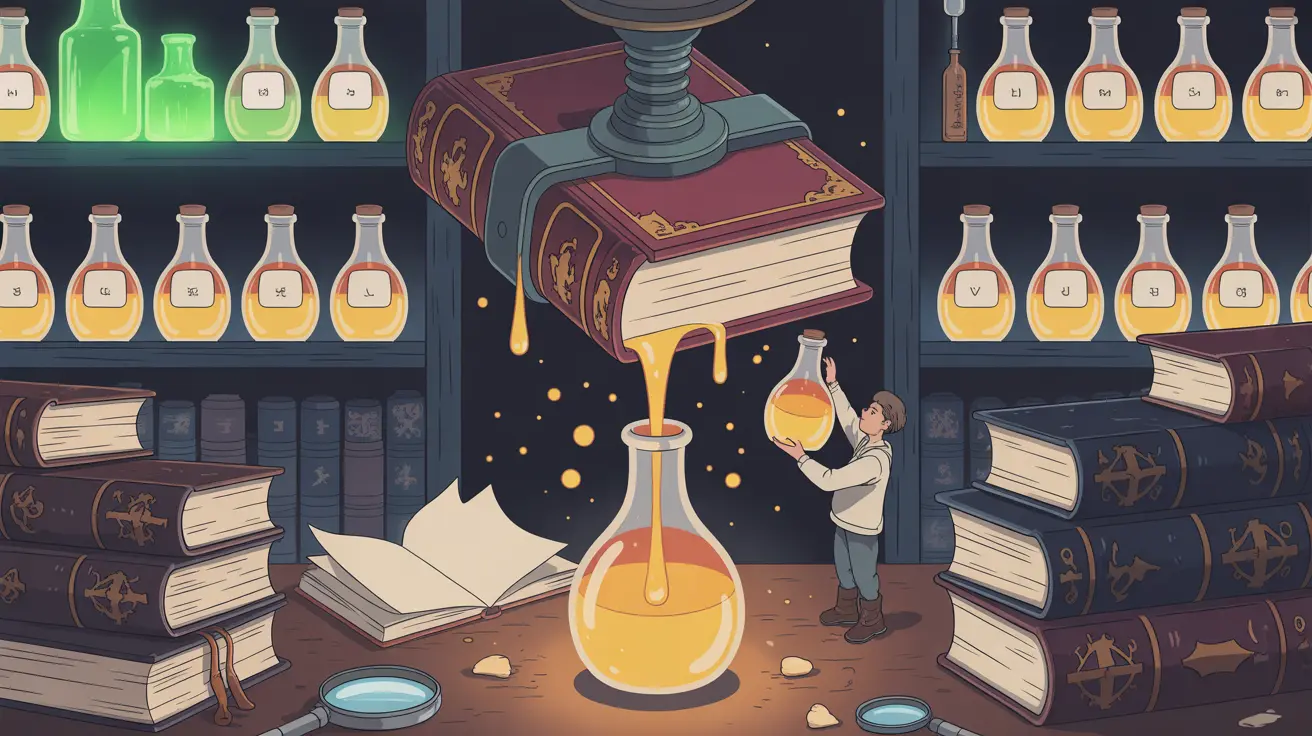
A micro edition takes the original novel and condenses it to roughly 25% of its length while keeping everything that matters. Full plot. Every character arc. The emotional beats. The themes. What disappears is redundancy: passages that hammer a point already landed, descriptions that served a Victorian serialization schedule but stall a modern reader cold. That’s condensed literature with the full story — a format built for how people actually read now.
The difference from traditional abridgments comes down to intent. Old abridgments slashed for length. Micro editions rewrite for clarity and faithfulness. The story stays whole. The tone stays honest.
Dreamsquare publishes micro editions of classic novels on this exact principle. Classic books under 100 pages that were originally three or four times longer — with nothing lost from the narrative. If you’ve sidestepped a classic because the page count felt like a wall, this format exists for that specific problem.
And the thing nobody says out loud? The real cheat isn’t reading a condensed version. It’s pretending you understood 400 pages you half-skimmed in a tired haze at midnight.
Your One-Evening Plan
Quick decision. Is the classic under 150 pages? Use the techniques above and read the original. Kafka, Hemingway, Stevenson, Orwell, Steinbeck — those are your one-evening originals. Classic books under 100 pages are everywhere once you start looking.
Over 150 pages? Go with a micro edition. You get condensed literature with the full story intact, finish in a single sitting, and actually remember what happened the next morning.
Either way, set up the evening right. Phone in another room — not silenced, physically removed. A drink you enjoy. No background TV. Three 45-minute reading blocks with short breaks in between. That structure alone changes everything.
For a first run: The Old Man and the Sea or The Metamorphosis if you want an original. A micro edition of The Picture of Dorian Gray, A Tale of Two Cities, or Frankenstein if you’re reaching for something bigger.
The goal was never about proving anything to a book club or checking off a list. It’s simpler. Experience a great story in one evening. Close the book. Know — actually know — you read it.
That’s not cheating. That’s reading.
Frequently Asked Questions
Can you really read a classic novel in one evening?
Yes, if you match the book to your time or the format to the book. Many classics fall under 150 pages and fit comfortably into three to four hours at an average reading speed of 250 words per minute. For longer novels, micro editions condense the full story to about a quarter of the original length without dropping plot, characters, or themes.
Are condensed or micro editions of classics considered cheating?
No. A micro edition preserves the complete narrative, character arcs, and thematic weight of the original. It removes redundancy and updates the language. That’s a format choice, not a shortcut — the same way watching a film adaptation is a different experience of the same story, not a lesser one.
What are the best classic books to read in one sitting?
Strong picks: The Old Man and the Sea (Hemingway, 96 pages), The Metamorphosis (Kafka, 44 pages), Animal Farm (Orwell, 95 pages), Dr. Jekyll and Mr. Hyde (Stevenson, 64 pages), Of Mice and Men (Steinbeck), and The Call of the Wild (Jack London, 72 pages). All classic books under 100 pages. All genuine literary heavyweights.
Stay in the loop
Get notified when we publish new stories about books, storytelling, and the magic of reading.
Stay in the loop
Get notified when we publish new stories about books, storytelling, and the magic of reading.