100 Classic Books Everyone Should Read (And How to Actually Finish Them)
Dreamsquare Team
Share this article
You own at least one classic book you’ve never finished. It’s on a shelf somewhere — spine uncracked past page 60, wedged between a thriller you tore through in two days and a cookbook you actually use. Maybe it’s Crime and Punishment. Maybe Moby-Dick. You bought it with conviction. Abandoned it with guilt.
Massive company, though. According to the NEA’s Survey of Public Participation in the Arts, fewer than half of American adults finished even one book last year. For classics specifically, the numbers get uglier. Kobo’s e-reader data showed that even bestselling literary novels get completed by fewer than half the people who buy them. Classics — with archaic syntax and 500-page spines — fare worse.
But here’s what most “best classic books of all time” lists won’t say: the problem isn’t your attention span. Not your discipline, either. These books were packaged for a world that no longer exists. Nobody updated the delivery.
This is a list of classic books everyone should read — 20 essential picks with specific reasons each one matters today. And a guide to actually finishing them.
The 50-Page Wall
Reading platforms and researchers keep surfacing the same pattern: most readers who quit a book do so between pages 50 and 100. According to data compiled by Preply, 46.4% cite “slow or boring” as the reason. Not “too difficult.” Not “too long.” Boring.
That word matters. These books aren’t boring. Anna Karenina is a psychological thriller in period-drama clothing. Frankenstein is a horror novel about parental abandonment. The Count of Monte Cristo is a revenge blockbuster. Full stop. The stories grip. The language they’re wrapped in? That’s where friction lives.
Think about it: Dickens wrote Great Expectations in weekly serial installments built to be compulsively readable. Cliffhangers. Plot twists. Emotional gut punches on a schedule. Readers devoured it. Today the same text sits in a Penguin Classics edition with a 40-page scholarly introduction, and we wonder why people stall at chapter three.
The abandonment rate for classic literature isn’t a reading crisis. It’s a format crisis.
20 Must-Read Classic Books (And Why They Still Matter)
Not a ranking. A reading map — organized roughly from most accessible to most demanding. Pick an entry point that matches where you are right now.
1. Animal Farm — George Orwell (1945) Around 140 pages. One afternoon. Orwell’s allegory about power and corruption hits differently every time the news cycle reminds you that some animals are, indeed, more equal than others. The easiest classic to start with.
2. The Great Gatsby — F. Scott Fitzgerald (1925) Short, devastating, deceptively simple. Fitzgerald packed an entire critique of the American Dream into fewer than 200 pages. Every sentence earns its place.
3. Frankenstein — Mary Shelley (1818) A 19-year-old woman wrote this in 1818 and invented science fiction. Forget Hollywood’s version — this is about creation meeting abandonment. Far more readable than its reputation.
4. The Picture of Dorian Gray — Oscar Wilde (1890) Wilde’s only novel: a dark meditation on vanity, morality, and living without consequence. Also wickedly funny. The epigrams alone justify the read.
5. To Kill a Mockingbird — Harper Lee (1960) Scout Finch’s narration makes this one of the most naturally readable classics ever written. Underneath that accessible voice sits a searing examination of racial injustice that hasn’t aged as much as we’d like.
6. 1984 — George Orwell (1949) Big Brother. Doublethink. Thoughtcrime. Orwell didn’t predict the future — he described the mechanics of authoritarian control so precisely that every generation sees itself in the text. That’s terrifying.
7. Pride and Prejudice — Jane Austen (1813) The sharpest social comedy in English. Austen’s wit works like a scalpel. The Bennet-Darcy romance is really about the cost of snap judgments and the labor of genuine understanding.
8. Jane Eyre — Charlotte Brontë (1847) A first-person voice so vivid it feels like someone speaking directly to you. Jane’s insistence on her own worth still lands with force two centuries on. You root for her from page one.
9. The Strange Case of Dr Jekyll and Mr Hyde — Robert Louis Stevenson (1886) Two hours. That’s all it takes. Stevenson’s exploration of duality influenced everything from psychology to superhero origin stories. The original is tighter and stranger than any adaptation you’ve seen.
10. Dracula — Bram Stoker (1897) Told through letters, diary entries, newspaper clippings. The epistolary format feels surprisingly modern. This is a horror novel that builds genuine dread — and yes, it’s better than every movie version.
11. The Count of Monte Cristo — Alexandre Dumas (1844) Long. Also the greatest revenge story ever written. Dumas builds suspense across decades with the patience of a chess grandmaster. The payoff is unmatched. If the length intimidates you, a micro edition is a strong way in.
12. Great Expectations — Charles Dickens (1861) Dickens at his most personal. Pip’s arc from shame to self-knowledge is one of fiction’s great coming-of-age stories. The prose runs dense by modern standards. The emotional architecture? Flawless.
13. Crime and Punishment — Fyodor Dostoevsky (1866) A man commits murder and then psychologically falls apart. That’s the entire plot. Dostoevsky turns the mind inside out — uncomfortable, relentless, impossible to put down once it hooks you. A modernized language edition makes his prose feel immediate, not distant.
14. One Hundred Years of Solitude — Gabriel García Márquez (1967) Seven generations of the Buendía family in a town where magic and reality share a street address. Márquez won the Nobel for this. He earned it.
15. Brave New World — Aldous Huxley (1932) Orwell warned about oppression through fear. Huxley warned about oppression through pleasure. Read both, then look at your phone. Huxley might’ve been closer to the mark.
16. Wuthering Heights — Emily Brontë (1847) Not a love story. A story about obsession, cruelty, and the way damaged people destroy each other across generations. Heathcliff isn’t romantic. He’s terrifying. That’s what makes this extraordinary.
17. The Odyssey — Homer (c. 8th century BC) The oldest adventure story in Western literature. Still holds up. Odysseus spending ten years trying to get home is a premise so strong every medium has retold it since. Grab a modern translation — Emily Wilson’s reads like a contemporary novel.
18. Anna Karenina — Leo Tolstoy (1878) Tolstoy wrote the opening line everybody quotes, then backed it with 800 pages that earn every word. A novel about desire, society, and trying to live honestly inside dishonest systems. It demands patience. Rewards it tenfold.
19. Don Quixote — Miguel de Cervantes (1605) The first modern novel. A man reads too many adventure stories and decides he’s a knight. Hilarious. Heartbreaking. And it asks a question nobody’s answered: is it nobler to see the world as it is, or as it should be?
20. Beloved — Toni Morrison (1987) Morrison’s most devastating work. A formerly enslaved woman is haunted — literally — by the past she tried to escape. The prose is dense, musical, shattering. Not an easy read. An essential one.
The Format Problem Nobody Talks About
Here’s what every “classic books everyone should read” article skips: these books were written for a fundamentally different reading reality.
Dickens wrote for weekly serialization. Dostoevsky published in literary journals. Tolstoy’s audience had no competing screens. No notifications. No 12-hour workdays followed by four hours of streaming. These novels were built for deep, uninterrupted attention in an era that provided it by default.
Modern readers aren’t less capable. They’re differently situated. And the honest answer to “how do I finish Crime and Punishment?” isn’t “try harder.”
It’s: find a format that matches how you actually read in 2026.
Three things that work.
First — modernized language editions. A version of Frankenstein or Dracula in contemporary English. Same story, same tone, same characters, same themes. Without the friction of 19th-century syntax. This isn’t dumbing anything down. It’s restoring accessibility. Dreamsquare’s modernized classics do this: full-length, faithful to the original’s style, readable as any book on the shelf today.
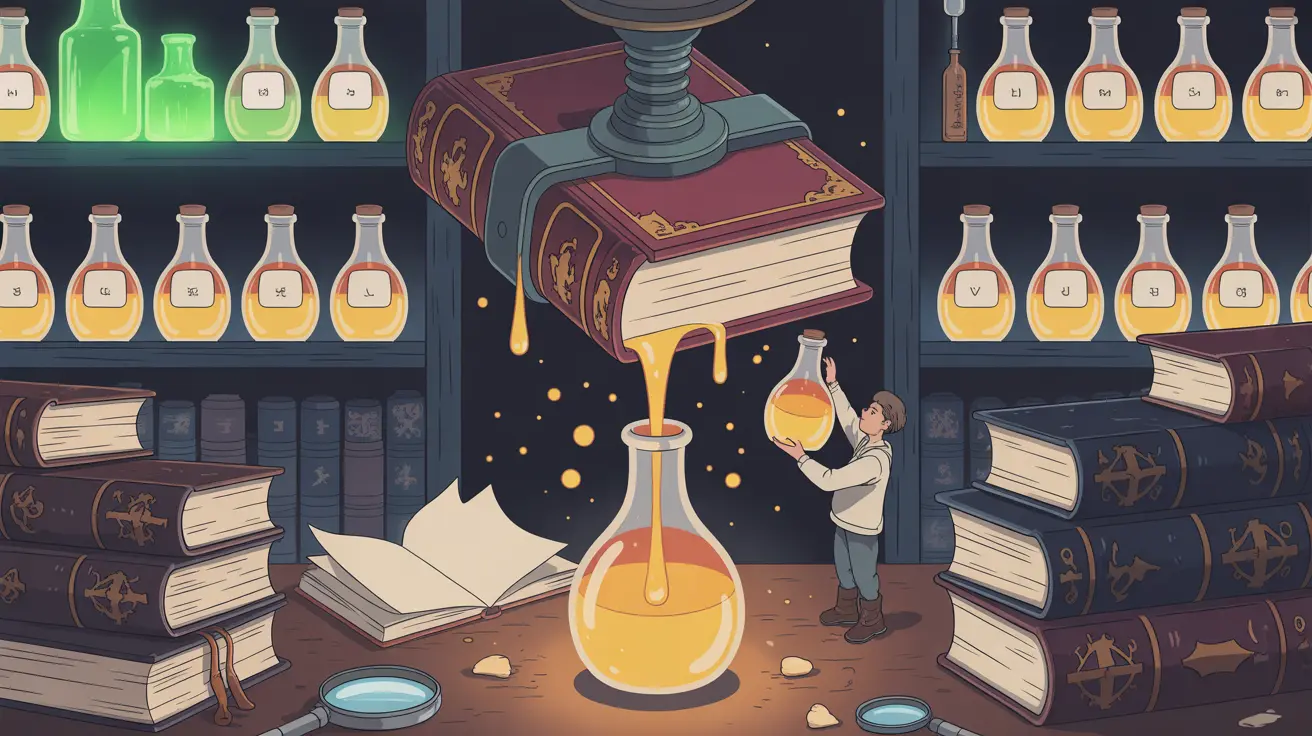
Second — micro editions. Condensed to roughly 25% of the original length, with every plot point, character arc, and thematic beat preserved. A condensed edition that keeps the full story isn’t cheating — it’s how you actually read Dostoevsky in 2026. Dreamsquare’s micro editions let you experience The Count of Monte Cristo or Anna Karenina without the 800-page wall.
Third — audiobooks designed as performance, not recitation. Multi-voice narration. Sound design. Production that treats a 19th-century novel the way a studio treats a screenplay. That’s not a compromise. That’s storytelling catching up with the medium.
The Canon Is Wrong (And That’s Fine)
A confession. The literary canon — that informal list of “important” books on every must-read classic books list — was assembled by a narrow group. Predominantly white, predominantly male, predominantly Western European. That doesn’t make these books bad. Most are here because they earned their spot. But your reading list doesn’t have to look like anyone else’s.
Skip Ulysses if stream-of-consciousness glazes your eyes. Start with Christie if mystery pulls you into a book. Pick up Things Fall Apart by Chinua Achebe instead of another Dickens if you want a perspective the traditional literary canon list ignored.
Okay, that’s a bit unfair to the canon. Some of these books genuinely rewired how humans think about themselves. Crime and Punishment didn’t just tell a story — it mapped the architecture of guilt. Pride and Prejudice didn’t just entertain — it dissected how performance warps perception. The best classic books of all time earned that phrase because they said something no one had said before, in a way nobody’s matched since.
But read them because you want to. Not because someone handed you a homework assignment.
How to Actually Start (And Finish)
Pick by interest. Not obligation. Love thrillers? Start with Dracula or Jekyll and Hyde. Love romance? Pride and Prejudice or Jane Eyre. Want to understand power? Animal Farm or 1984.
Start short. Animal Farm: 140 pages. Gatsby: under 200. Frankenstein: under 300. Build momentum with books you can finish in a weekend before you go anywhere near Tolstoy.
If the original language feels like wading through concrete — try a modernized edition before you quit the book entirely. The easiest classics to start with are the ones in a format that matches how you read now.
Audiobooks. Strategically. A well-produced audiobook carries you through passages that would stall you on the page. Immersive multi-voice productions turn novels into experiences you can take on a commute, a walk, a late-night kitchen cleanup.
And the 50-page rule: if a book hasn’t grabbed you by page 50, don’t switch books. Switch formats. Try the modernized text. The micro edition. The audiobook. The story might be exactly what you need. The packaging might be what’s failing you.
Frequently Asked Questions
What are the easiest classic books to start with? Animal Farm (Orwell), The Great Gatsby (Fitzgerald), Frankenstein (Shelley), and Dr Jekyll and Mr Hyde (Stevenson). All under 300 pages, all with accessible prose. If archaic language is the barrier, modernized editions lower it.
How many classic books should you read in a year? No magic number. One finished classic beats five abandoned ones. Start with two or three short picks. If you catch momentum, the pace takes care of itself.
Are condensed or modernized versions of classics worth reading? Yes. A faithful condensed edition keeps every important story element at roughly a quarter of the length. That’s not a shortcut — it’s a different format for the same story. Modernized language editions keep the full text with updated readability. Both are legitimate ways to experience classic literature.
One Book
Not how many classics you’ve read. Not whether you’ve conquered some literary canon list. The only metric that matters: have you read one — all the way through — and closed the back cover wanting another?
That’s what these books were written for. Not shelf decoration. To be read. Finished. To make you reach for the next one.
Pick one from this list. Pick the format that works for how you actually live. And read it.
Stay in the loop
Get notified when we publish new stories about books, storytelling, and the magic of reading.
Stay in the loop
Get notified when we publish new stories about books, storytelling, and the magic of reading.