What Is an Epistolary Novel? Why Books Made of Letters Feel So Alive
Dreamsquare Team
Share this article
An epistolary novel tells its story through documents a character writes - letters, diaries, clippings, and now emails and, in some analyses, texts and voice notes. It feels alive because you're reading someone perform a version of themselves, in real time.
What an epistolary novel actually is - letters, and everything after letters
The word sounds more technical than it is. An epistolary novel is a novel told through the medium of letters written by one or more characters. That's a clear, widely cited starting point.
But the form outgrew the mailbox a long time ago. The term now stretches to cover diary entries, newspaper clippings, and transcripts - and, at its edges, novels built entirely from documents with no actual letters in them at all, as the wider record of the form shows.
Then came the electronics. Recordings, radio broadcasts, blog posts, and emails all qualify now; texts and voice notes are a natural editorial extension of that same logic. Which means the group chat lighting up your phone works, loosely, like an epistolary structure your ancestors would recognize.
The word itself is friendlier than it looks. Epistolary is just the adjective form of epistle, from the Latinized Greek epistolē - meaning, plainly, a letter.
One quick distinction, because people mix these up. Epistolary means the story is told through documents. "Found footage" - the horror staple - implies the documents were discovered after the fact. Related cousins, but not the same thing.
An epistolary novel isn't defined by letters. It's defined by the illusion that no author is telling the story - only the documents its characters left behind.
Why the form feels alive: directed speech and a chosen self
Here's the mechanism the definition pages skip. A letter is one-to-one, directed speech. A character isn't reporting to some neutral middle-distance narrator. They're talking at a specific person, and it changes everything about what they say.
Think about how you write. The message you send your boss and the one you send your best friend describe the same day in two different languages. Every letter is a small performance - the writer choosing which version of themselves to hand over. That's a craft observation, not a hard law. But read any good epistolary novel and you'll feel it operating.
The payoff is spelled out in the form's own reputation: the letter presents an intimate view of a character's thoughts and feelings without interference from the author, and it conveys the shape of events to come with dramatic immediacy. No middleman. Just the character, curating.
That reliance on subjective viewpoint is exactly why the epistolary novel gets called a forerunner of the modern psychological novel. Before authors learned to render interior life directly, letters were how you got inside a head.
An analogy from outside books. A scripted news anchor tells you what happened, cleanly, on cue. A voicemail someone leaves at 2 a.m. is messier, rawer, full of things they'll regret saying - and that's precisely why you believe it. Epistolary fiction is the voicemail.
A narrator tells you what happened; a letter shows a person deciding what to admit. The gap between the two is where the intimacy lives.
The five sub-types, with one example each
Not all epistolary novels behave the same way. The real question underneath the form is always this: how many voices are in the room? What follows is an editorial synthesis of the categories described across Britannica, Wikipedia, and academic sources, matching each shape to a well-known title. Treat it as a working map for readers, not a formal taxonomy every scholar would sign off on.
| Sub-type | Definition | Representative example |
|---|---|---|
| Monologic | Letters from a single correspondent | The Color Purple - Celie writing to God, and then to her sister |
| Dialogic | An exchange between two correspondents | Les Liaisons dangereuses - its schemers volleying letters like knives |
| Polylogic / polyvocal | Many characters' documents assembled into one archive | Dracula |
| Mixed-media / documentary | Letters plus diaries, clippings, transcripts | Frankenstein (frame letters plus nested narrative); World War Z (oral-history interviews) |
| Digital-native | Emails, texts, blog posts, DMs, voice notes | Attachments; Illuminae |
One title in that mixed-media row sits at the edge and is worth flagging: Frankenstein uses an epistolary frame - only Walton's opening and closing letters are documents - while the bulk of the novel is nested oral narration rather than a documentary assemblage. It belongs to the tradition without being a clean example of the type.
Read the table as a map, not a rulebook. It clarifies what no single ranking page bothers to organize, and it's offered to be tested against the books themselves.
Every epistolary novel answers one question: how many voices are in the room? The answer, from one letter-writer to a whole assembled archive, shapes the entire reading experience.
The honest downsides the definition pages won't tell you
The intimacy comes with a bill. Most explainers pretend it doesn't. Here's what they leave out.
Start with the strengths, because they're real. Intimacy, polyvocality, and a strange kind of suspense: in Dracula, because you hold every document at once, you frequently know more than any single character does. Oregon State's breakdown makes this point well. You're assembling the truth faster than the people living it.
Now the pacing risk. Information only reaches you when a character bothers to write it down. Handle that clumsily and the story stalls, or leaves holes where nobody thought to document the important part.
Then there's the exposition strain. Nobody in real life narrates their own home address or their childhood backstory in a letter. When a weak epistolary novel forces that in, you hear the machinery grinding. The whole illusion sags.
And verisimilitude - the make-or-break. If the letters don't read like something an actual person would write, the form collapses on contact. Distinct, believable voices aren't a nice-to-have here. They're the load-bearing wall.
The epistolary form's greatest strength and its fatal flaw are the same rule: nothing exists on the page unless a character chose to write it down.
From Pamela to your group chat: a history that never actually ended
People call this an old-fashioned format, but the timeline complicates that - letter-fiction predates even the books we call the "first" English novels. Samuel Richardson's Pamela; or, Virtue Rewarded (1740) is often credited as an early landmark of the fully epistolary novel - a scholarly convention rather than settled fact, since earlier letter-fiction exists.
The eighteenth century was the form's high point. Richardson's sprawling, acclaimed Clarissa followed, and for a stretch the letter novel was a default shape for serious prose fiction.
By the gothic nineteenth century the form had learned a new trick. Bram Stoker's Dracula (1897) assembles letters, diaries, telegrams, and clippings into a dossier that generates dread through fragmentation. You piece the horror together document by document.
Then the "pure" letter novel thinned out. Relatively few books today are written entirely in letters, as Oregon State notes. But it didn't die. It went mixed-media, and then it went digital.
The revival is everywhere once you look. Rainbow Rowell's Attachments runs on office emails; Illuminae stitches together instant messages, ship logs, and hacked files. Every group chat on your phone works, loosely, like an epistolary form running live, whether or not anyone calls it that.
The epistolary novel never went out of style - it just changed stationery, from wax seals to read receipts.
Myth vs. reality: three things readers get wrong
The complaints are predictable. Mostly answerable in a sentence each.
"It's only letters."
No. The form spans diaries, newspaper clippings, courtroom transcripts, emails, and - in more recent analyses - texts and voice notes. Letters were the origin, not the ceiling.
"It's outdated."
Illuminae, Attachments, and every text-thread novel on the shelf say otherwise. The format didn't age out. It migrated to the devices you already stare at all day.
"It's confusing or plotless."
Usually that's the form working as designed. Multiple documents build more suspense than one narrator, because you're assembling the truth ahead of the characters. Dracula depends on it.
Sometimes the real barrier is an older classic's archaic language - Pamela, Clarissa, Dracula. A modernized edition keeps the letter-format intimacy while making the sentences readable. That's one option worth considering, not a prescription.
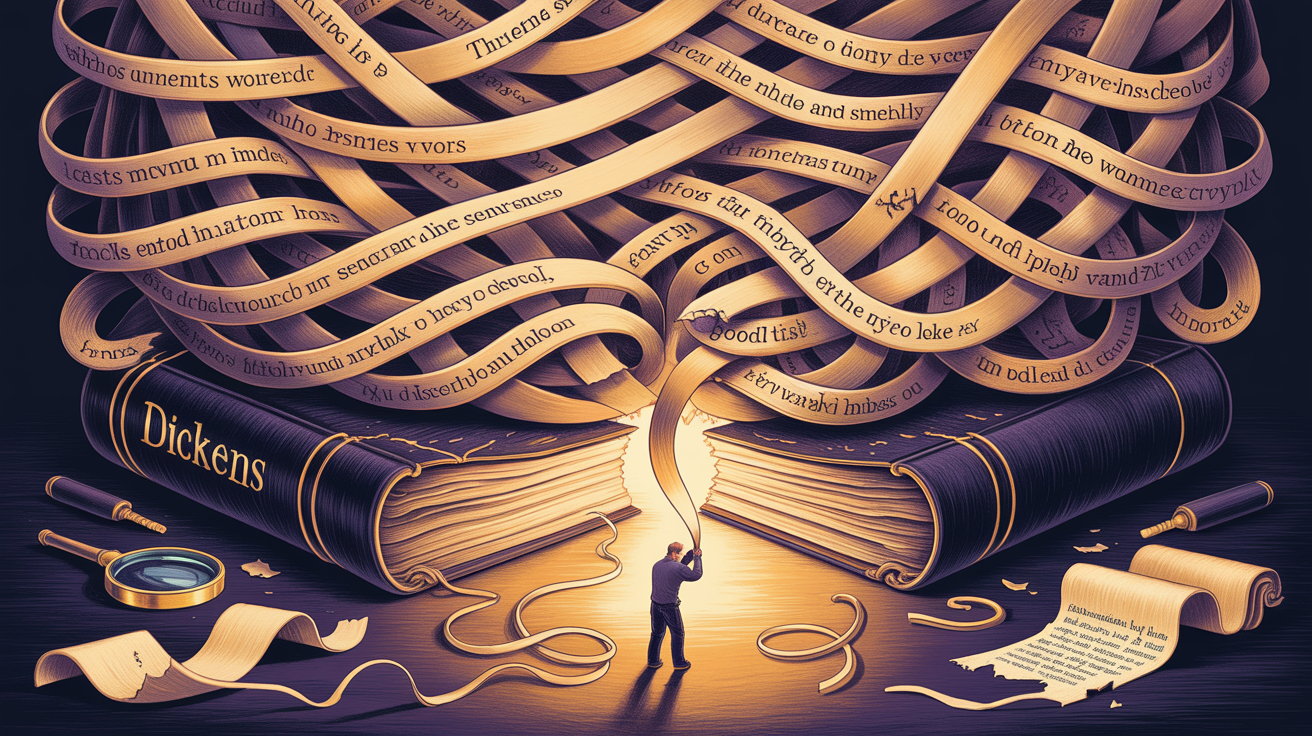
The most common complaint about epistolary novels - that they're confusing - is usually the form working as designed: it makes you a detective instead of a passenger.
Your practical takeaway: how to pick your first (or next) one
Match the sub-type to the itch. Want raw single-voice intimacy? Start monologic with The Color Purple. Want dread and suspense? Go polylogic with Dracula. Want something that feels like your own screen - that Illuminae-style scroll of files and pings - go digital-native.
If archaic language is the sticking point with a classic, a modernized edition is one option worth considering. And for non-English works like Les Liaisons dangereuses, what you actually want is a fresh translation. Because the polyvocal structure hands each character a distinct voice, this is also the kind of book worth checking for a multi-voice audiobook edition if one exists.
Then run the two-document test. Read the first two or three letters or entries before you commit. If the voice sounds like a real person deciding what to admit, the whole book will hold. If it reads like exposition wearing a letter's clothes, it won't.
Choose an epistolary novel the way you'd choose whose voicemail to listen to first - by whose voice you actually want in your head.
FAQ
What exactly is an epistolary novel - is it just letters?
It's a novel told through the documents its characters produce. Letters are the classic version. But the form has long included diaries, newspaper clippings, transcripts, and - more recently - emails, blog posts, and, in some analyses, texts and voice notes. So no: not just letters.
Are there modern epistolary novels told through emails or texts?
Plenty. Rainbow Rowell's Attachments is built from office emails. Illuminae by Amie Kaufman and Jay Kristoff runs on instant messages, ship logs, and hacked files. The digital-native branch of the form is thriving, which is why "outdated" is the wrong word for it.
What are the pros and cons of the epistolary format?
The pros are intimacy - an unfiltered view of a character's thoughts - along with multiple perspectives and built-in suspense when readers know more than any single character. The cons are pacing, since information only arrives when someone writes it down. Add exposition that can feel forced, and the fragility of the illusion if the letters don't sound like real people. Same rule powers both. Nothing's on the page unless a character chose to record it.
Stay in the loop
Get notified when we publish new stories about books, storytelling, and the magic of reading.
Stay in the loop
Get notified when we publish new stories about books, storytelling, and the magic of reading.