The Complete Guide to Immersive Audiobooks: Beyond Narration
Dreamsquare Team
Share this article
Most audiobooks are karaoke.
One person behind a microphone, doing their best impression of a story written for dozens of voices, multiple locations, and an emotional range no single human can sustain across twelve hours of recording. The words are all there. The timing is correct. But the experience? Missing entirely.
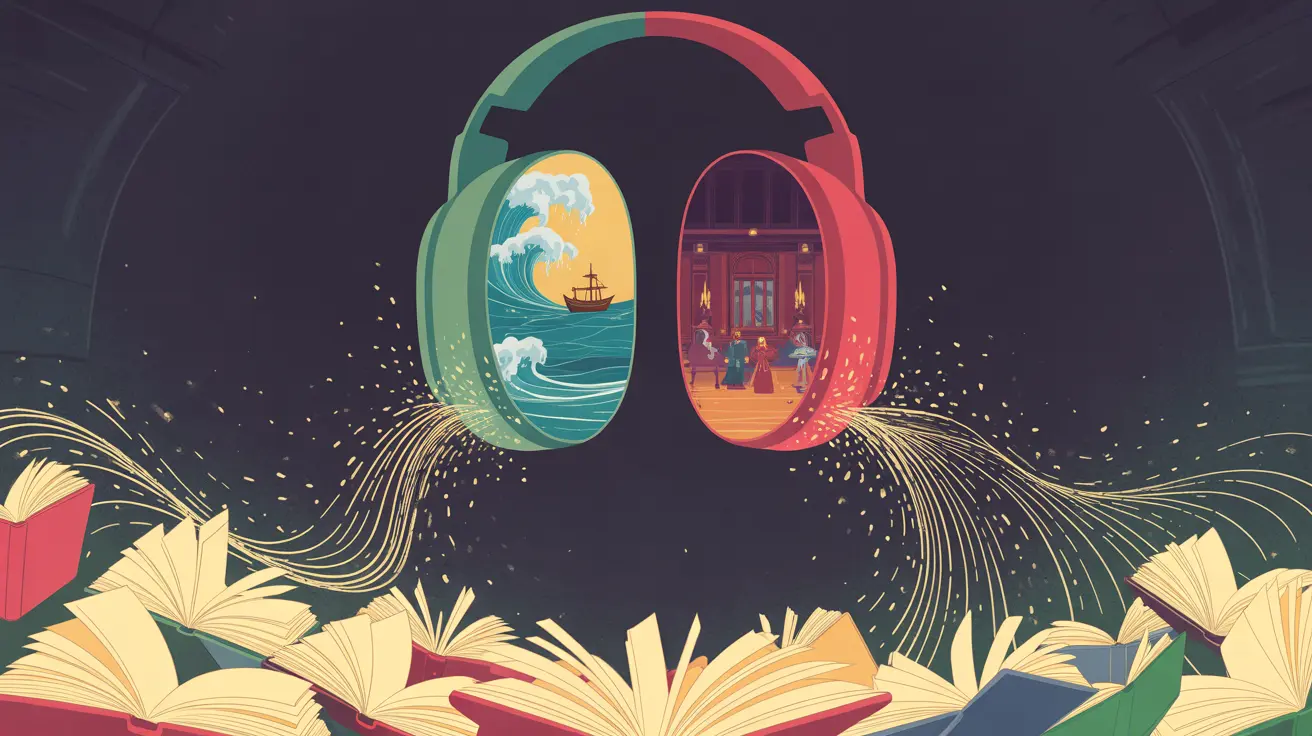
Immersive audiobooks — productions built with full casts, sound design, and cinematic scoring — are the format that finally treats the audiobook as more than a book read aloud. They treat it as a performance. And the gap between listening to a narrated book and experiencing an immersive audiobook is the gap between someone describing a thunderstorm and standing in the rain.
This isn’t a knock on narrators. Some of the finest performances in audio history come from a single voice behind a mic. But the format — one person reading a book out loud — is a production standard from the 1990s that the industry never seriously re-examined. The cassette became a CD. The CD became a download. The download became a stream. The production method? Frozen in place.
Immersive audiobooks break that freeze. And once you hear the difference, going back feels like switching from a film soundtrack to someone humming the tune from memory.
What “Immersive” Actually Means
The term gets thrown around loosely. So here’s a framework. Immersive audiobooks exist on a spectrum, and each layer adds something qualitatively different.
Single narrator is the baseline. One voice, one microphone. The narrator handles every character, all the exposition, every emotional shift. This is the vast majority of what Audible, Libro.fm, and most platforms sell today.
Multi-voice audiobooks assign different narrators to different characters — or at minimum, alternate between a male and female voice for perspective chapters. Romance and YA fiction use this approach most often. It cuts confusion in dialogue-heavy scenes and adds tonal range you simply can’t get from one throat.
Full cast audiobooks take it further. Every named character gets their own voice actor. A dedicated narrator handles exposition, but when characters speak, you hear distinct people having actual conversations. GraphicAudio’s productions regularly feature ten to thirty actors per title. That’s not embellishment. That’s commitment.
Dramatized audiobooks layer sound design on top of the full cast. Rain on cobblestones. A crowded marketplace buzzing with haggling voices. The low hum of a ship engine. Music that scores emotional beats the way a film soundtrack does — a sword unsheathed, a door slamming shut, footsteps echoing down a stone corridor.
Spatial audio — like Audible’s Dolby Atmos line — places those sounds in three-dimensional space around the listener. A character speaking from behind you. Rain falling from above. Footsteps panning left to right as someone crosses the room you’re sitting in.
Each layer isn’t just “more.” It’s a qualitative shift in how the story reaches your brain. A single narrator asks you to imagine everything. A full production gives your imagination a running start.
The Science Behind Why Immersive Audiobooks Work
Not just preference. Actual research.
A 2024 study published in SAGE Open surveyed 537 audiobook listeners and identified two factors that most strongly predicted whether someone would keep listening: telepresence — the feeling of being physically transported into the story world — and emotional connectedness to the characters. Both were significantly enhanced by narrator performance quality and background audio elements like music and ambient sound.
The industry’s own numbers confirm this pattern. A 2023 Voices survey found 64% of listeners said narrator quality is essential to a good audiobook experience. And here’s the uncomfortable one: 59% admitted they’d stopped listening to a book partway through because the narrator wasn’t working for them.
Sit with that number for a second. More than half of all audiobook listeners have abandoned a book — not because the story was bad, but because the delivery couldn’t sustain their attention over hours of listening. A single narrator reading dialogue between six characters is the audio equivalent of one actor performing an entire play alone on stage. It can be done brilliantly. But the format itself is working against you from the start.
Multi-voice audiobooks and full cast productions address this by distributing the cognitive load. When each character sounds like a genuinely different person, your brain stops spending energy tracking who’s talking and starts engaging with what they’re actually saying. Sound design adds environmental context that prose normally has to spell out in words — which frees the narrative to move faster and hit harder.
Theatre Mode: A Different Category, Not an Upgrade
This is where the distinction matters most.
Theatre Mode — the format Dreamsquare builds its immersive audiobooks around — isn’t a better audiobook. It’s a different thing altogether. The difference is the same one between reading a screenplay on paper and watching the finished film.
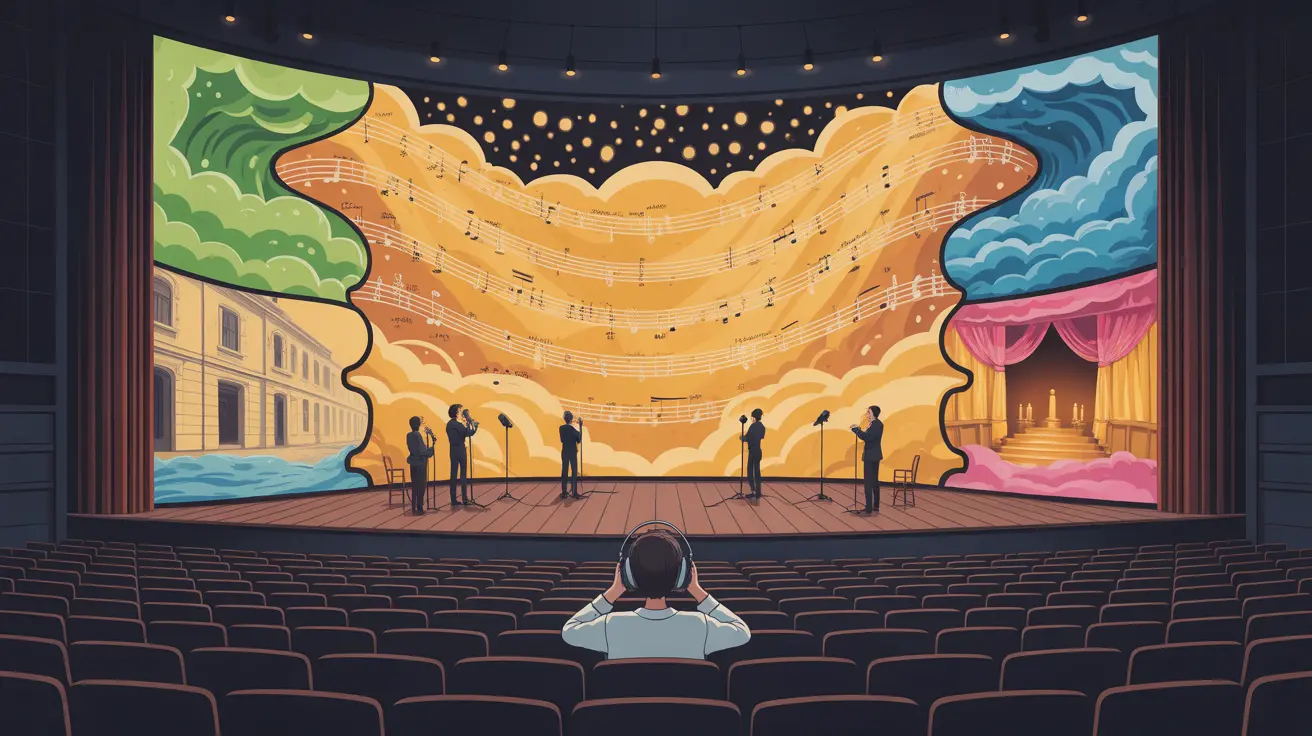
In a Theatre Mode audiobook, every element is designed from scratch for the ear. Voice actors don’t read lines — they perform scenes, reacting to each other in real time. Sound designers construct environments that place you in a specific location at a specific moment. Music doesn’t just play underneath the words. It responds to the emotional arc of what’s unfolding.
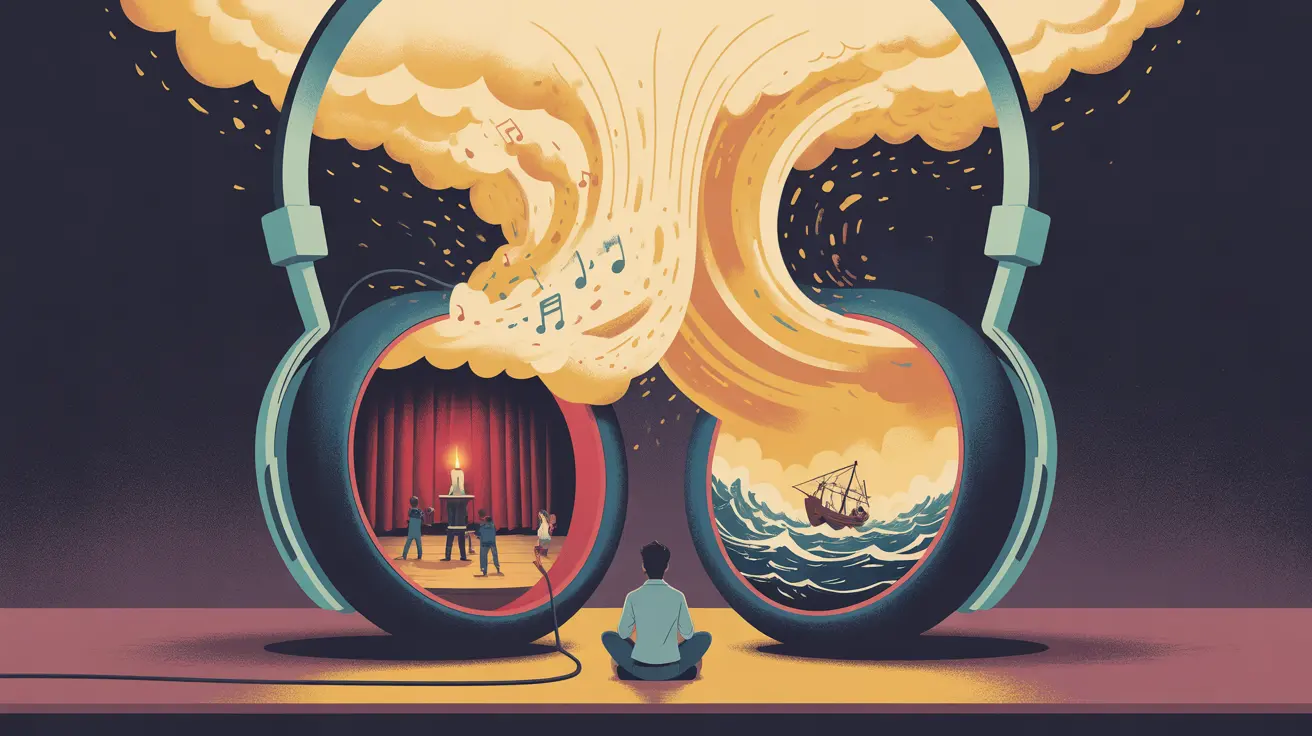
The result lands closer to a cinematic audiobook experience than anything the traditional format can deliver. You’re not listening to someone describe a tense confrontation in a candlelit room. You hear the candles flicker. You hear the chair scrape across stone. You hear the controlled fury in a voice that’s trying very hard not to crack.
And this matters for how you remember the story afterward. When every scene is produced as a distinct audio environment, the story creates anchor points in memory — the same way a film’s score makes certain scenes impossible to forget twenty years later. You don’t just remember what happened. You remember how it sounded.
Dreamsquare’s Theatre Mode applies this production philosophy to classic literature. Same story, same themes, same weight — delivered through a medium that matches the ambition the original author carried. Because when Dostoevsky wrote the interrogation scenes between Raskolnikov and Porfiry, he wasn’t imagining one guy in a recording booth reading both parts. Nobody was.
Okay — Single Narrators Aren’t All Karaoke
Fair point. Time to complicate my own metaphor.
Stephen Fry reading Harry Potter is not karaoke. Jeremy Irons narrating Lolita is not karaoke. An author reading their own memoir — sitting inside the pauses, the hesitation, the weight of their own lived experience — that’s something no full cast can replicate. Some things only work with one voice.
And some stories are intimate by design. A quiet first-person narrative about grief. A philosophical meditation that lives entirely in one character’s skull. A skilled solo narrator serves those perfectly, maybe even ideally.
But here’s the catch. That’s a strength of specific performances, not the format as a whole. For every Stephen Fry, there are thousands of competent-but-unremarkable narrations that do nothing wrong and nothing memorable either. They deliver the text accurately. They don’t deliver the story.
Even the best solo narrators would benefit from production support. Imagine Fry’s Potter with atmospheric Hogwarts soundscapes layered underneath. With Dobby’s voice arriving from a different spatial position than Dumbledore’s. With a musical score that swells when Harry walks into the Great Hall for the very first time. Audible eventually came to the same conclusion — their Dolby Atmos full-cast Harry Potter edition exists because someone at Amazon looked at the original and realized that even something iconic can leave room on the table.
The AI Narration Squeeze
Here’s what nobody in the industry wants to say out loud.
AI-narrated audiobooks now account for 23% of all new releases. That figure grew 36% year over year between 2023 and 2025. Audible alone has published more than 40,000 AI-narrated titles with over 100 synthetic voice options across multiple languages.
The technology isn’t flawless yet. But it’s close enough. For a standard single-narrator audiobook — the read-the-text-aloud kind — most listeners can’t reliably tell the difference on a first pass. AI narration has already cut recording costs by up to 80%, which means publishers can now convert their entire backlist to audio without setting foot in a studio.
So what happens when a passable single-voice reading costs almost nothing to produce?
The format becomes a commodity. And the premium shifts — hard — toward what can’t be automated.
AI reads text competently. It modulates tone on command. What it cannot do, and won’t for a considerable time, is direct a cast of human actors through a scene. It can’t make the creative call that this particular moment needs three seconds of silence instead of a musical cue. It can’t sense that a character’s entrance should be scored differently in chapter twelve than in chapter three, because by that point your emotional relationship with that character has fundamentally changed.
Creative direction. Cast chemistry. The instinct for when sound design should pull back and let silence do the work. These are human skills exercised at the production level. They’re also exactly what makes immersive audiobooks a category apart from the standard format. AI didn’t kill the audiobook. It killed the excuse to keep producing them the same way we have for thirty years.
How to Choose an Immersive Audiobook Worth Your Time
Not every production labeled “immersive” delivers equal quality. Here’s what separates real immersive audiobooks from marketing copy.
Check the credits. A full cast audiobook will list multiple voice actors. A dramatized audiobook will credit a sound designer or audio director. If the listing shows one narrator and nothing else — it’s a standard production, regardless of how the marketing frames it.
Listen to the sample. Most platforms offer one-to-five-minute previews. In a properly produced immersive audiobook, you’ll hear environmental audio within the first thirty seconds. If the preview sounds like someone reading alone in a quiet room, that’s exactly what the remaining ten hours will sound like too.
Look at the runtime. Dramatized productions with sound design, scene transitions, and musical scoring often carry slightly different runtimes than their text equivalents. That’s not filler. That’s the production breathing.
Consider the source. GraphicAudio maintains the largest catalogue of full cast dramatized audiobooks. Audible Originals and their Dolby Atmos collection offer premium immersive titles. Dreamsquare’s Theatre Mode catalogue focuses on classic literature produced at cinematic standards — Dostoevsky, Brontë, Austen, experienced the way those stories were always meant to sound.
Match format to genre. Fantasy, sci-fi, thriller, and literary classics with large character ensembles benefit most from immersive production. A business book or a quiet personal essay? A single skilled narrator is likely the right call there.
The Format Catching Up to the Audience
The global audiobook market is projected to grow from roughly $10 billion in 2025 to somewhere between $27 billion and $56 billion by 2032, depending on whose model you trust. Whatever the exact figure, this much is clear: that growth will not come from producing more of the same thing. It’ll come from raising the ceiling on what an audiobook can actually be.
Listeners under 35 already make up the majority of the audiobook audience. They grew up streaming Netflix, building playlists on Spotify, and playing games with orchestral soundtracks and spatial audio baked in. Their baseline expectation for production quality is cinematic by default. Handing them a twelve-hour single-narrator reading and expecting the same engagement is like giving a streaming-native viewer a filmed stage play and calling it television. Technically accurate. Experientially, a different planet.
Immersive audiobooks aren’t a niche format for audiophiles with expensive headphones. They’re the medium finally catching up to the audience that’s already listening.
Next time you press play on an audiobook, ask yourself one thing: am I listening to a story — or am I just listening to someone read?
Frequently Asked Questions
What is the difference between a dramatized audiobook and a regular audiobook?
A regular audiobook features one narrator reading the complete text aloud. A dramatized audiobook uses multiple voice actors, environmental sound effects, ambient atmospheres, and music to create a theatrical listening experience. Each character is performed by a different actor. Scenes carry environmental audio that places you in a location. Music underscores emotional beats the way a film soundtrack does. The core difference: the text is performed, not merely read.
Are immersive audiobooks harder to follow than standard ones?
Generally the opposite. Research suggests multi-voice audiobooks are actually easier to follow, particularly during dialogue-heavy scenes, because each character carries a distinct voice. Listeners no longer need to mentally track who’s speaking. Sound design provides additional environmental cues that orient you within a scene without the narration having to explain everything verbally. Many first-time audiobook listeners report finding dramatized versions more accessible than single-narrator editions.
What is Theatre Mode in audiobooks?
Theatre Mode is Dreamsquare’s production format for immersive audiobooks. It combines full cast voice acting, designed sound environments, and emotional scoring to deliver a cinematic audiobook experience. Theatre Mode productions are built from the ground up as audio performances — each scene receives its own atmosphere, spatial characteristics, and musical identity. The distinction from a standard audiobook is fundamental: it’s not a book read aloud, but a story brought to life entirely through sound.
Stay in the loop
Get notified when we publish new stories about books, storytelling, and the magic of reading.
Stay in the loop
Get notified when we publish new stories about books, storytelling, and the magic of reading.